On this page4
Apartment Closet Organization
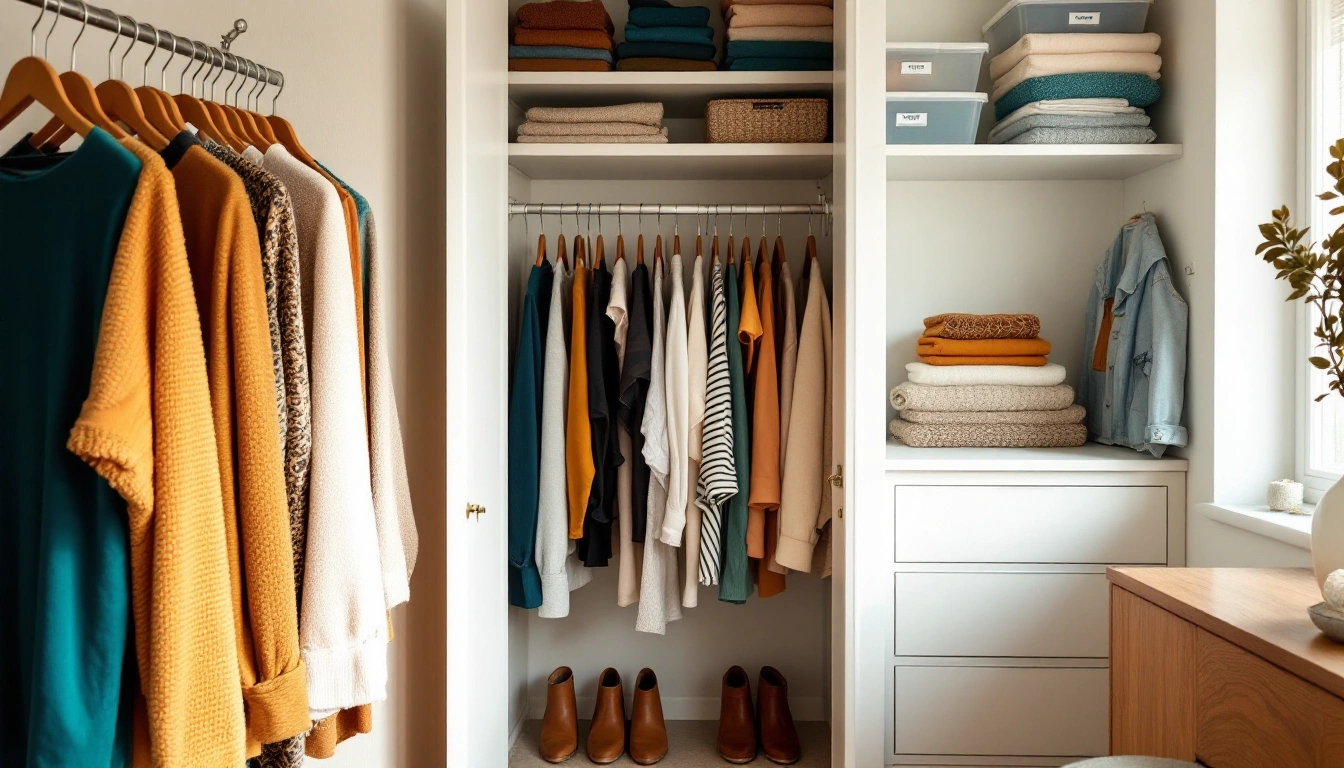
Most rental closets waste half their height. Add a second rod for short items, keep one column for long ones, and put everything above eye level into labelled bins.
As an Amazon Associate, this website earns from qualifying purchases.
Double-hang: the math
A standard reach-in closet has one rod at about 66 inches and a shelf above it. Shirts hang about 40 inches long. That leaves roughly two feet of dead air under everything you own.
To double-hang, you want the upper rod around 80 inches from the floor and the lower rod around 40 inches, giving each run about 40 inches of clearance. If your closet is shorter than 80 inches inside, double-hang only the half you use for shirts and leave the rest single. Measure the inside height and your longest short garment before you order anything — the same rule as everywhere else in apartment organization.
Long coats and dresses need 60 to 70 inches, so give them one narrow column and stop them eating the whole rod.
Shelf, bin, or rod
The rule is simple: if you can see it and reach it, it can be loose. If it is above your eye line or behind something else, it goes in a bin with a label on the front edge.
| Where | What lives there | What does not |
|---|---|---|
| Top shelf | Bins only. Off-season clothes, spare bedding, the suitcase. Anything you touch less than once a month. | Loose stacks. They slide, and you cannot see the bottom third from floor level anyway. |
| Upper rod | Shirts, blouses, folded trousers, jackets. Everything short, in one continuous run. | Long coats and dresses. One long item under a double-hang setup wastes the whole column beneath it. |
| Lower rod | The other half of your short items, or a hanging shoe unit if you own more shoes than shirts. | Anything that drags on the floor. Two inches of clearance, minimum. |
| Long-hang column | Keep one narrow section single-height on the left or right for dresses, coats and anything with a train of fabric. | Spreading long items across the whole rod. Corral them in one column and double-hang the rest. |
| Floor | Shoes on a low rack, and a laundry basket. That is the entire list. | A pile. Floor piles are how a closet stops being a closet and becomes a place you shut the door on. |
Four changes worth paying for
You do not need a closet system. Four cheap changes do most of the work, and none of them puts a hole in a wall.
- Slim velvet hangers — They hold about twice as many garments per foot of rod as chunky plastic, and shirts stop sliding off onto the floor. Buy one pack, see if the rod copes, then buy the rest.
Browse on Amazon → - A second hanging rod — A hanging rod that clips onto the existing one costs less than a shelf and needs no screws. This is the single biggest gain in a rental closet.
Browse on Amazon → - Shelf dividers or fabric bins — Folded knitwear collapses sideways within a week. Dividers or open bins keep stacks upright and keep the shelf readable.
Browse on Amazon → - Vacuum bags for off-season — Winter coats and duvets compress to about a third of their bulk. Do not use them for anything with structure or down you care about long term.
Browse on Amazon →
Shoes
Shoes are the thing that ruins closet floors. Pick one of three: a low rack at the bottom of the closet, a hanging fabric organizer on the lower rod, or a rack by the front door for the pairs you wear daily. Do not run two systems, because the pair you need is always in the other one.
Browse hanging shoe organizers on Amazon →
Off-season
Twice a year, everything out of season goes into a labelled bin on the top shelf or a flat box under the bed. Write the season and the contents on the outside. A bin you have to open to identify is a bin you will not open.
The five-minute reset
A closet drifts fast. Run this on the same day you do laundry and it never needs a full rebuild.
- Everything on the floor goes back on a hanger or into the laundry basket.
- Fix backwards hangers and rehang anything that has slipped off.
- Pull one item you have not worn in a year into a donate bag by the door.
- Straighten the folded stacks and push the bins back to the shelf edge.
- Close the door and look at it. If a category has spilled, it needs a bin, not more willpower.
If the closet is genuinely too small for what you own, the honest fix is owning less or finding hanging space elsewhere — see small apartment storage for the rest of the room.