Storage Tricks for Tiny First Apartments
Small-apartment storage comes down to using height, not floor space — vertical shelving, under-bed bins, closet doubling, and double-duty furniture, mostly for $10–50 a trick.
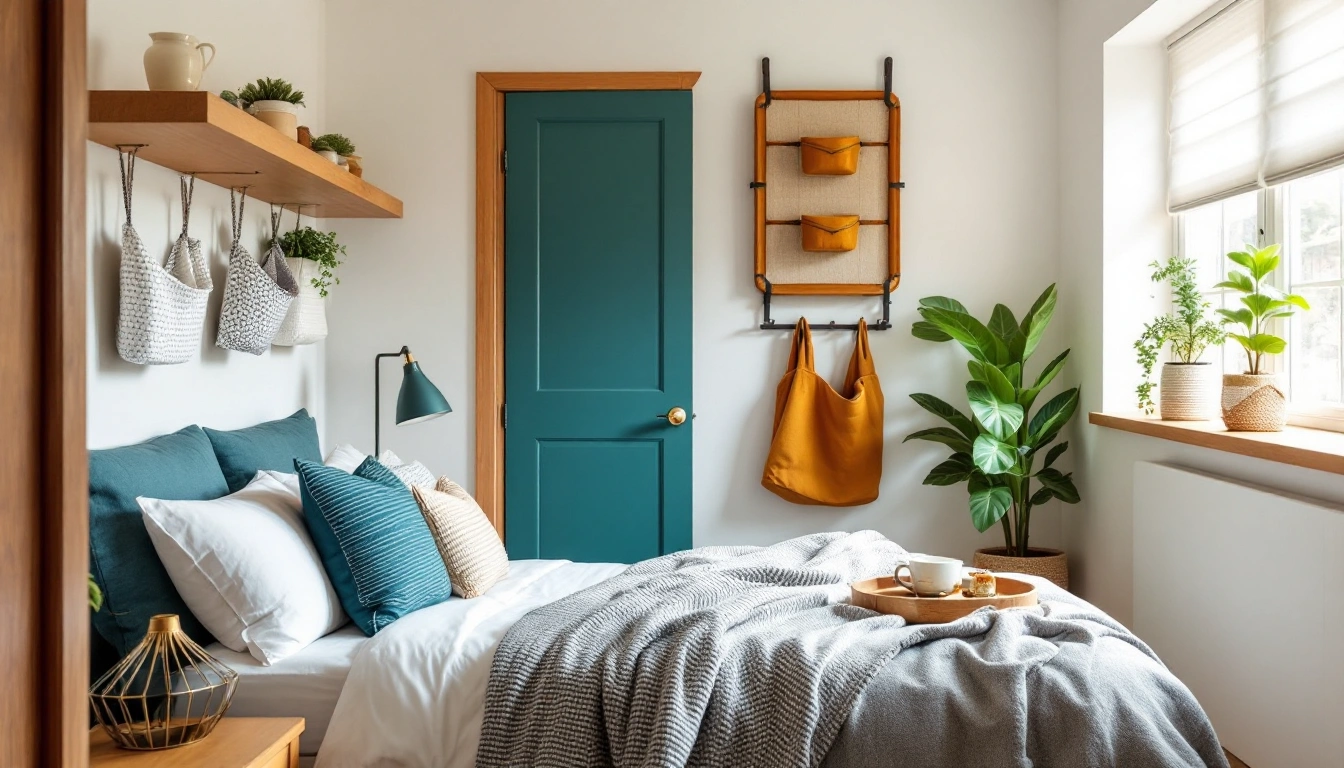
A tiny apartment isn't a storage problem so much as a geometry problem — most of the usable space in a small unit is vertical, and most furniture is designed as if floor space were free. These fifteen tricks all do the same basic thing: claim height, corners, and dead zones that plain furniture ignores, mostly without touching the deposit.
-
Go vertical before you go anywhere else
A small apartment's untapped storage is almost always straight up. Wall shelves, tall bookcases, stacking bins — floor space is the scarcest resource in a first apartment, and the walls are free. Renter-friendly wall shelving runs $15–40 a shelf and holds more than a floor unit twice its footprint.
-
Under-bed bins turn dead space into a closet
The gap under a bed frame is one of the largest unused volumes in most apartments. Flat under-bed bins ($10–25 each) handle off-season clothes, extra bedding, or the suitcase you only need twice a year — all invisible, all reachable in ten seconds.
-
Over-door organizers claim space that has no other job
The back of a closet, bathroom, or pantry door is pure bonus storage — nothing else competes for it. A $10–20 over-door organizer holds shoes, cleaning supplies, or pantry overflow with zero drilling and zero deposit risk.
-
Double-duty furniture buys storage without buying storage
An ottoman that opens, a bed frame with drawers underneath, a bench with a lid — each one is furniture you needed anyway, quietly doing a second job. They cost more upfront ($60–200) than the plain version, but they replace a whole separate storage piece.
-
The one-in-one-out rule keeps small spaces small forever
Storage tricks buy space; they don't create it. The simplest permanent fix costs nothing: when something new comes in, something comparable goes out. Skip this and even the best-organized apartment fills back up in a year.
-
Closet rods double the hanging space you already have
Most closets use maybe half their vertical height. A second closet rod hung below the first ($15–30) doubles hanging capacity for shirts, folded pants, and shorter items — no construction required.
-
Shelf risers stack a shelf's worth of space into itself
A closet shelf usually wastes the air above whatever's sitting on it. Stackable shelf risers ($10–25 for a set) add a second tier to any flat shelf — sweaters on the bottom, off-season stuff on top.
-
Cabinet risers do the same trick in the kitchen
Plates stack, but mugs and bowls waste height above them. A cabinet riser or two ($10–20) turns one deep shelf into two usable ones, which matters more in a kitchen with three cabinets than one with fifteen.
-
Renter-safe wall systems add storage without touching the deposit
Damage-free hooks, adhesive strips, and tension-mounted shelving units hold real weight without a single hole. The renter-friendly upgrades guide covers exactly which products are actually deposit-safe versus which ones lie about it on the box.
-
A door-back shoe rack clears the entryway floor
Shoes piled by the front door eat visible floor space and make a small apartment look smaller than it is. A hanging or over-door shoe rack ($15–25) gets them onto a wall the eye skips right past.
-
Drawer dividers make small drawers hold more, not less
Without dividers, a junk drawer fills with air gaps and lost items. A $10–15 divider set turns the same drawer into defined slots, which in practice fits noticeably more in the identical space.
-
A rolling cart is storage that follows the need
A slim rolling cart ($25–50) can live in a kitchen gap one month and a bathroom corner the next — storage that relocates instead of storage that's stuck wherever it was first set down.
-
Corner shelves use the one spot furniture always ignores
Corners are dead space in nearly every room — too awkward for furniture, perfect for a small floating shelf ($10–20) holding books, plants, or the stuff that otherwise ends up on a counter.
-
Vacuum-seal bags shrink what you're not using right now
Off-season bedding and clothes take up volume mostly made of air. Vacuum-seal bags ($10–20 for a set) compress that air out, shrinking a bin's worth of bulky items down to a fraction of the space.
-
The label makes the system last
An unlabeled bin becomes a mystery bin within a month, and mystery bins get dug through, disorganized, and eventually ignored. A $5 label maker or a roll of masking tape and a marker is the cheapest thing on this list and the one most likely to make everything else actually stick.
Start with the worst offender, not the whole apartment
Trying to fix every room's storage in one weekend is how these projects stall out. Pick the single most annoying space first — usually the closet or the kitchen — apply two or three tricks from this list, and live with it a week before moving to the next room. Small, deposit-safe changes compound faster than one big overhaul, and the renter-friendly upgrades guide has the full list of what's actually safe to put on the walls.