25 Packing Hacks That Actually Work
The hacks that earn their hype: use clothes as padding, pack plates vertically, wrap drawers shut, color-tape by room, and seal a last-box-first-box.
The internet is full of moving hacks, and about half of them create more work than they save. These twenty-five are the survivors — the ones that cost nothing (or close to it), save real time or real breakage, and don't require you to become a person who owns a label maker. Steal freely.
-
Pack clothes as padding
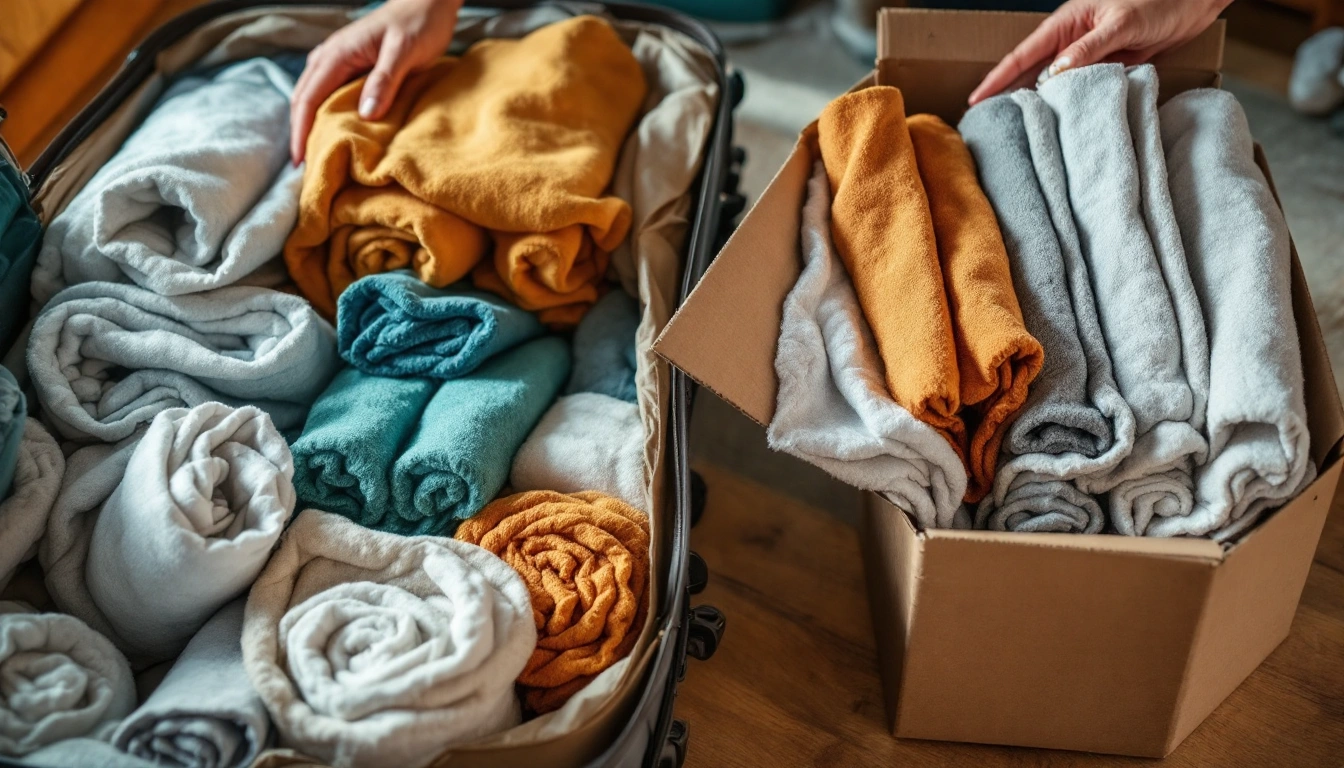
T-shirts, towels, and socks are free bubble wrap. Wrap mugs in shirts, stuff glasses with socks, and cushion box bottoms with hoodies — two packing problems solved at once.
-
Load plates vertically
Plates stacked flat crack under their own weight. Slot them on their edges like records, with a shirt or paper between each, and they survive almost anything.
-
Books go in small boxes only
A large box of books weighs as much as a small appliance and the bottom knows it. Small boxes, or roll them into a wheeled suitcase.
-
Photograph the cable setup
Before unplugging the TV, router, or console, take a photo of the back. Future you, staring at six identical black cords, will be grateful.
-
Plastic-wrap the drawers shut
Leave clothes in the dresser, stretch plastic wrap around the whole thing, and move it as-is. The drawers become their own boxes.
-
Suitcases carry the heavy stuff
Anything with wheels should earn its ride. Books, tools, canned goods — dense weight rolls instead of being carried.
-
Color-code by room
One color of tape per room, a strip on every box, and a matching strip on each doorframe at the new place. Helpers stop asking where things go.
-
Pack a last-box-first-box
The last box sealed is the first one opened: sheets, a towel, toilet paper, chargers, toiletries, scissors, snacks. Label it loudly and keep it in your car, not the truck.
-
Label the sides, not the top
Tops disappear the moment boxes get stacked. Write the room and contents on two sides and you can read any box in a pile.
-
Take a photo of every open box
Before taping a box shut, snap its contents. When you need the can opener in week two, you scroll instead of dig.
-
Ziplock the hardware
Every screw, bolt, and shelf peg from disassembled furniture goes in a labeled bag taped to the furniture it came from. Never in a 'misc' cup.
-
Trash bags over hanging clothes
Leave clothes on their hangers, pull a trash bag up from the bottom, and tie it around the hooks. A closet moves in minutes and rehangs in seconds.
-
Tape screws to the wall art
Picture hooks and their screws taped to the back of each frame means rehanging takes minutes, not a hardware-store trip.
-
Cut handles into cardboard boxes
Two triangle cutouts near the top edges turn an awkward hug-carry into a real grip. A box cutter does it in ten seconds.
-
Stop the shampoo spill
Unscrew each bottle cap, lay plastic wrap over the opening, and screw the cap back on. Then bag all liquids anyway — belt and suspenders.
-
Pack an 'open me first' kitchen box
One pot, one pan, two plates, two sets of cutlery, a knife, dish soap, and a sponge. You can cook on night one while the rest waits.
-
Cheap foam plates between real ones
A pack of foam plates ($2–4) slotted between your ceramic ones is faster than wrapping each plate and works just as well.
-
Keep drawers and bins loaded
Storage bins, laundry hampers, and rolling carts are already containers. Tape or wrap them shut and move them full — packing them into boxes is double work.
-
Use the pot space
Every pot, slow cooker, and mixing bowl is empty cargo space. Fill them with spices, utensils, or the junk-drawer contents before boxing.
-
Roll, don't fold
Rolled clothes pack tighter and wrinkle less than folded ones. Vacuum bags shrink the bulky stuff — comforters, coats, towels — to half size.
-
Straws and toilet-paper rolls tame cords
Necklaces threaded through a straw don't tangle. Loose cables coiled into empty toilet-paper rolls stay separated and labelable.
-
Don't pack air
Half-empty boxes crush when stacked. Top off loose space with towels, pillows, or stuffed animals so every box is full but not heavy.
-
The two-hands rule
If you can't lift a box comfortably with two hands, repack it. Heavy things in small boxes, light things in big ones — never the reverse.
-
First-day tool kit rides with you
Box cutter, scissors, screwdriver, tape, and a phone charger travel in your backpack. The most common moving-day fail is packing the scissors you need to open the boxes.
-
Stage boxes by the door as you go
Finished boxes migrate toward the exit, heaviest in front. Load day becomes a conveyor belt instead of an apartment-wide scavenger hunt.
The meta-hack
Every trick above works better with a head start. Boxes packed over two calm weeks are labeled, sane, and two-hands liftable; boxes packed the night before are archaeology. If you haven't already, work backward from your move date with the 8-week moving checklist — the packing starts at the two-week mark for a reason.