On this page4
Packing Checklist: Room by Room
Pack in reverse-use order — storage and closets first, daily kitchen and bedding dead last. A typical first apartment runs 15–25 boxes total, and a handful of things never go in a box at all.
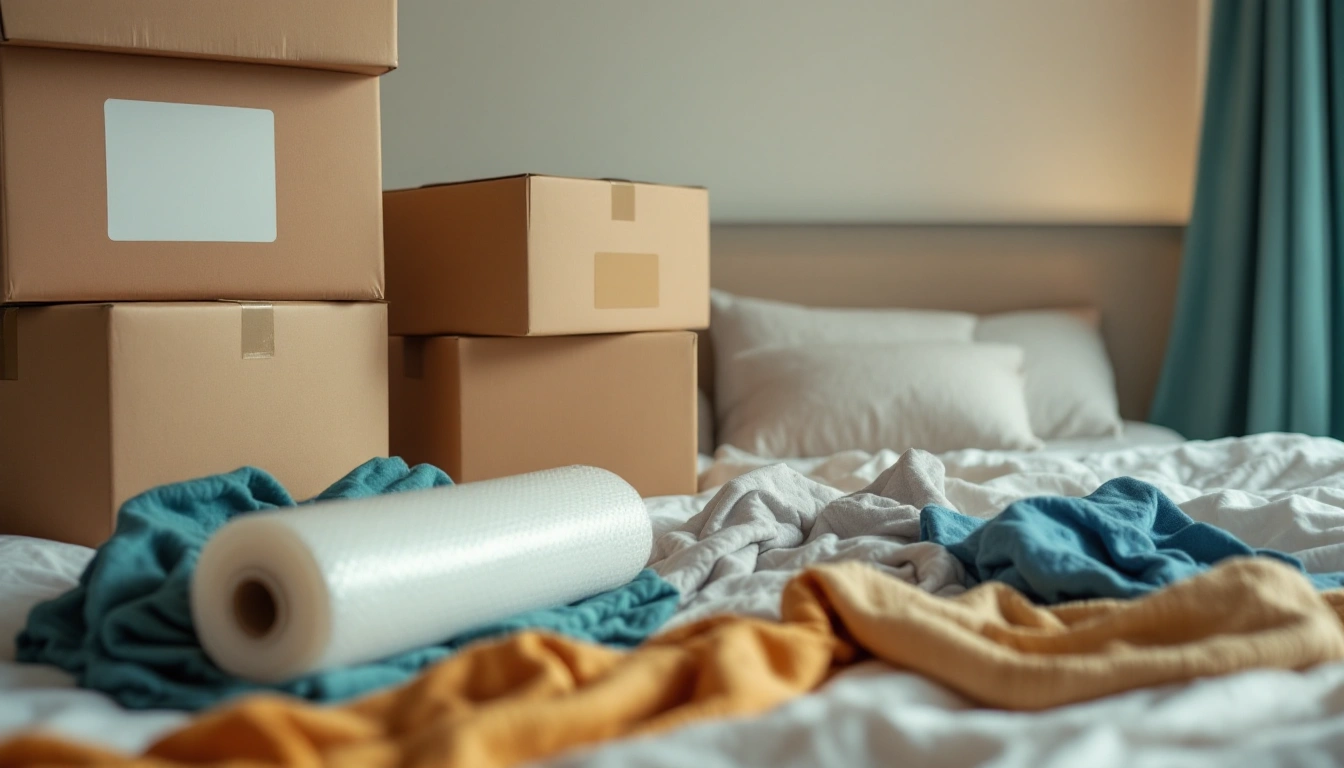
The packing question nobody answers well is "in what order?" Pack the wrong rooms first and you spend move week living out of a stripped apartment with nothing to cook in. Pack the right ones first and the place stays functional right up until moving day, because you worked outward from the rooms you barely touch to the ones you can't live without.
The order, room by room
Box counts below are for a typical first apartment (studio to one bedroom) — a bigger place or a pack-rat closet pushes every number up.
Storage, closets & the junk drawer 2–3 weeks out
2–4 boxes. Off-season clothes, luggage, holiday decorations, sports gear — anything you already think of as 'in storage.' If you haven't touched it this season, it goes first.
Books, decor & wall art 2–3 weeks out
2–4 boxes. Frames, shelves, knickknacks, books you're not mid-read. Wrap art and mirrors in towels or clothes instead of buying bubble wrap.
Living room extras 1–2 weeks out
2–3 boxes. Board games, spare blankets, the lamp you don't turn on, DVDs and old electronics. Leave one seat, one light, and the TV working.
Bedroom, off-season + spares 1–2 weeks out
3–4 boxes. Off-season clothing, extra bedding, shoes you wear twice a year. Leave one week of daily clothes hanging and one set of sheets on the bed.
Kitchen, everything but daily-use Final week
4–6 boxes. Appliances you use monthly (not daily), the backup dish set, pantry overflow. Leave one pot, one pan, one place setting, and the coffee maker.
Bathroom backups Final week
1–2 boxes. Backup toiletries, extra towels, the linen closet overflow. Leave one towel and whatever you use every morning.
Daily kitchen + daily bedding + toiletries Move day, packed dead last
2–3 boxes. The pot, plate, and towel you left out all week, plus the sheets off the bed that morning. This is the last box taped shut, and it isn't really a box — see below.
A labeling system that survives moving day
The system only has to do one job: let a tired person holding a box know exactly where it goes without asking. Five rules cover it.
- Room it's going to, in big letters, on two sides — not the top (tops disappear the second boxes stack)
- One word for what's inside: 'kitchen — pots,' not just 'kitchen'
- A star or 'OPEN FIRST' on anything you'll need within the first 24 hours
- 'FRAGILE' plus which side is up, if it matters — arrows help people who aren't you
- Same color tape per room, with a matching strip on that room's doorframe at the new place — helpers stop asking where things go
What never goes in a box
A short list of things that travel with you — in a bag, in your car, never in the truck. Losing one of these for a weekend is a real problem; losing a lamp for a weekend is not.
- IDs, passports, the lease, and any paperwork you'd panic about losing for a weekend
- Medications — prescriptions don't reliably survive a week in a moving truck's temperature swings
- Chargers for your phone and laptop, plus the laptop itself
- Jewelry, cash, and anything irreplaceable — small, valuable things vanish easiest in a pile of boxes
- A change of clothes and basic toiletries for the first night
This short list is really the seed of something bigger — the first-night box takes these same non-negotiables and adds the rest of what your first evening in the new place needs, from toilet paper to a phone charger. Pack it last, and carry it yourself.
Packing supplies, with real costs
- Boxes — free from grocery/liquor stores or a local Buy Nothing group $0, or $1–3 each bought new
- Packing tape, 3–4 rolls minimum $4–8 per roll
- Packing paper or newspaper for wrapping breakables $10–20 for a bundle
- A fat marker (one per helper, so nobody's waiting to label) $1–3 each
- Box cutter or scissors $3–8
- Furniture blankets, if you're borrowing a truck $0 rented with the truck, or $10–15 each to buy
Free boxes are genuinely fine — structural integrity doesn't care whether a box used to hold bananas or came flat-packed from a store. The only thing worth spending real money on is enough tape; running out mid-pack at 10 p.m. is how boxes end up "closed" with a single strip and a prayer.