On this page4
Renter-Friendly Kitchen Makeover
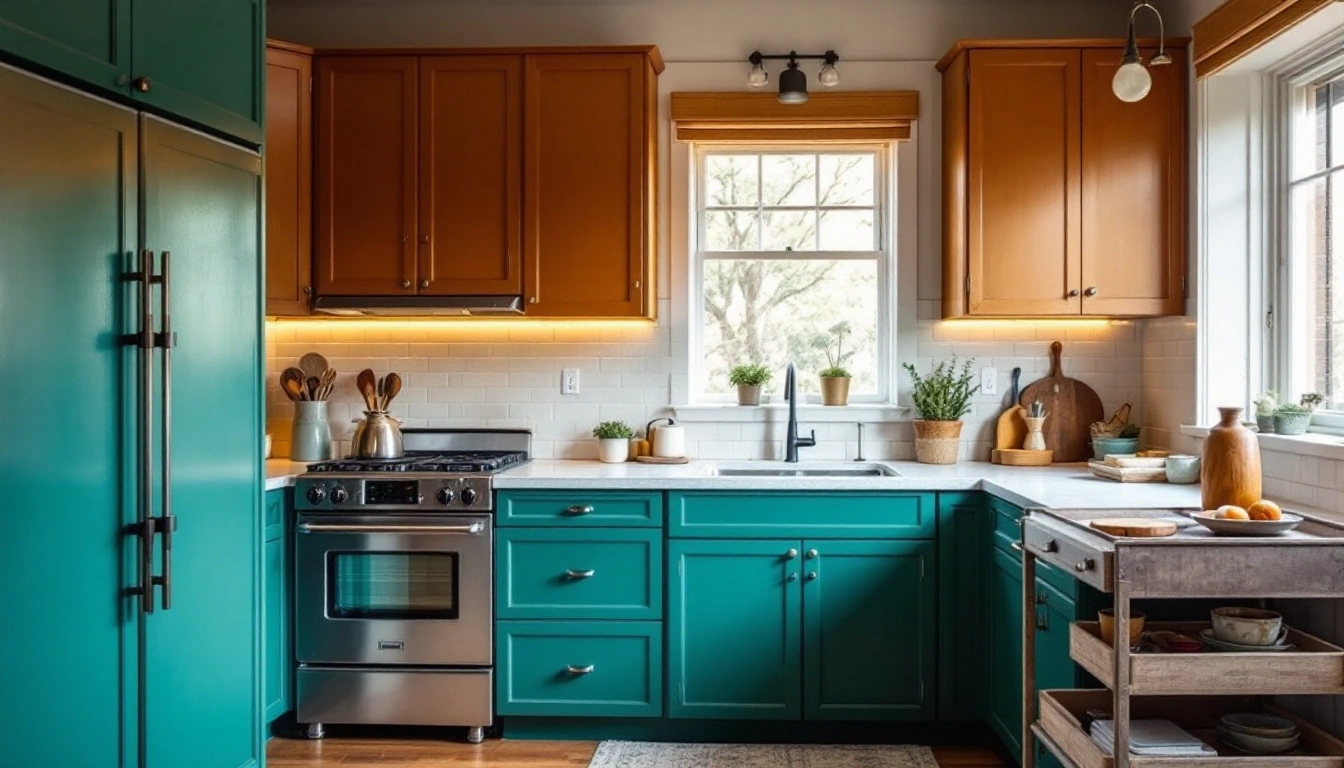
Four things ruin a rental kitchen: dated cabinets, one bad light, an ugly backsplash and no counter. Each has a fix that unscrews, peels off or rolls away.
As an Amazon Associate, this website earns from qualifying purchases.
The four problems, and what fixes them
Most people start with the backsplash because it photographs well and finish with the lighting, which is backwards. The lighting is the one you feel every day.
Cabinets in a wood tone from another decade
Change the hardware first. Every knob and pull unscrews, the new ones go in the same holes if you measure the hole spacing, and the originals live in a labelled bag until move-out. Removable cabinet film is the bigger swing: it works on flat smooth doors and looks wrong on moulded ones, so test a single door before you buy enough for twelve.
Hardware is cheap. Film costs more and risks more. Browse cabinet knobs and pulls on Amazon →
One ceiling light, and a dark counter
Rental kitchens are lit from behind you, so you chop in your own shadow. Stick-on LED strips or puck lights under the wall cabinets fix it. Buy the battery or rechargeable kind rather than anything wired, and match the colour temperature to the rest of the room — around 2700K for warm, 4000K if you cook a lot and want to see.
Cheap, and the change you feel every evening. Browse under-cabinet lights on Amazon →
A backsplash you would not have chosen
Peel-and-stick tile covers it and comes back off, with real limits — check the table below first. Where it works, start from the most visible corner, keep a damp cloth for the adhesive that squeezes out, and stop a hand's width short of the hob rather than tiling up to it.
Moderate, and the one to test on an offcut first. Browse peel-and-stick backsplash tile on Amazon →
Not enough counter to cook on
The only complaint here that is not cosmetic. A rolling cart is counter when you need it and storage the rest of the time, and it moves to the next apartment. Measure the gap it has to live in, including the fridge door swing. A board over the sink or an unused hob ring buys a second surface for almost nothing.
The expensive item here, and the one that solves a real problem. Browse rolling kitchen carts on Amazon →
Where peel-and-stick fails
It is sold as if it works everywhere. It does not, and the failures are predictable enough to plan around.
| Situation | What happens | Do this instead |
|---|---|---|
| Behind or beside the hob | Heat softens the adhesive. The sheet slumps or curls, then grease gets under the lifted edge. | Leave a gap at the hob, or use a clear acrylic splash guard for that section. |
| Textured or heavily grouted tile | The film only touches the high points, so every grout line telegraphs through and the corners let go. | Run a fingernail over the wall. If you can feel the pattern, it will show. |
| No extractor, and a lot of boiling | Steam plus a warm wall lifts the seams, first at the top edge where nobody looks. | Open the window while you cook and seal the top edge with clear caulk you can cut out later. |
| Fresh paint or painted-over wallpaper | The adhesive is stronger than the surface and pulls it off in strips. That is a repair charge. | Give new paint a month to cure, and never stick anything to wallpaper you did not hang. |
| Moulded, glossy or peeling cabinet doors | Film will not sit flat in the moulding and lifts along every raised edge within weeks. | Change the hardware and the lighting instead, and put the money into a cart. |
The box you keep for move-out
One shoebox on the top shelf, filled on the day you make each change. The whole deposit-safe decorating rule depends on putting the kitchen back the way you found it, and you will not remember which screws went where in eleven months.
- The original knobs and pulls, with their screws, in one labelled bag
- The original light shade, if you took it down
- A photo of every wall before you tiled it, and of the cabinet fronts
- A spare tile or two, in case you need to patch an edge
What to leave completely alone
Anything plumbed or wired: the tap, the waste, the extractor. Do not paint cabinet doors, even with the paint that promises no sanding, because a landlord charges for the whole set rather than the two you did badly. Do not drill for a wall rail, and do not take a cabinet door off unless you have somewhere safe to keep it for a year.
Once the room looks right, the next win is inside the cabinets: kitchen organization covers the layout, and kitchen essentials is what belongs in a first apartment kitchen at all.