Pantry Staples for a First Kitchen
A first pantry is 25 items: two oils, vinegars, rice, pasta, canned basics, six starter spices, and the sauces that turn them into dinner.
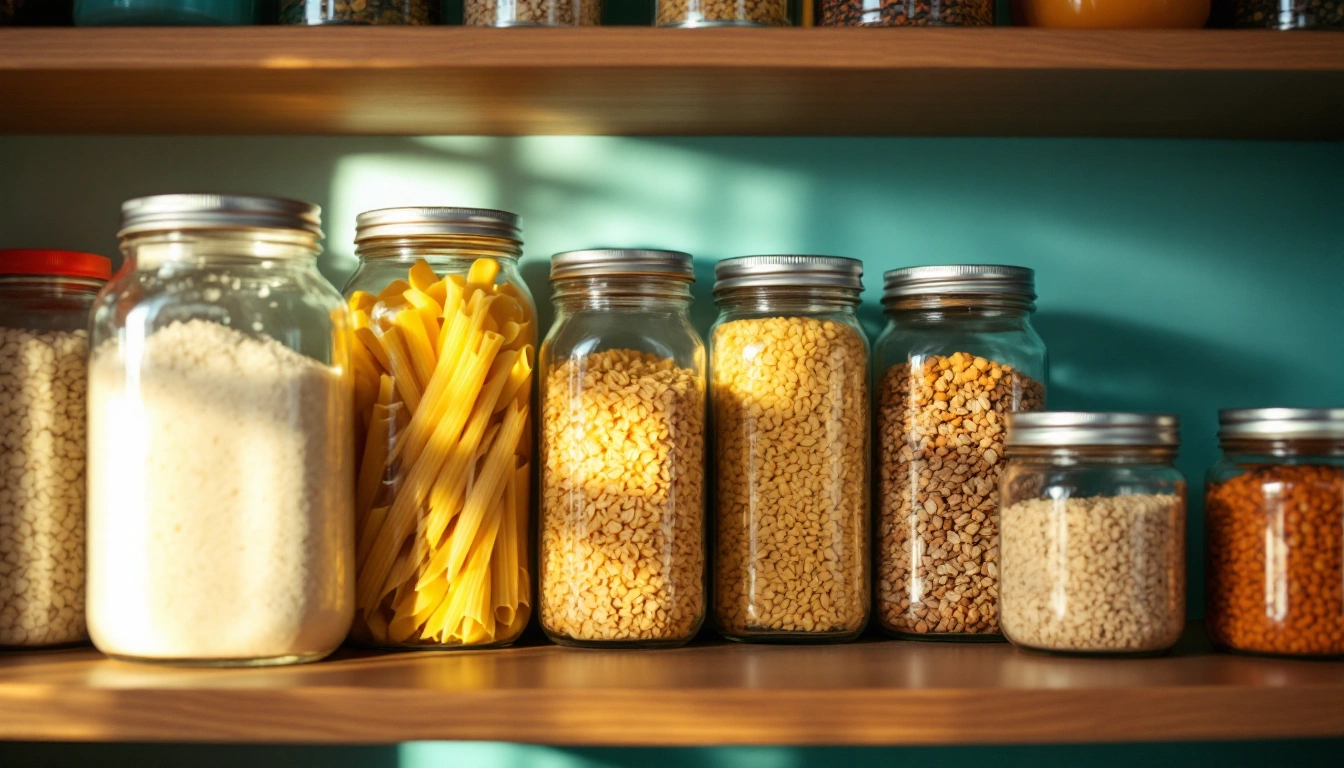
This is the backbone — the shelf-stable stuff that lives in your kitchen for months and quietly makes cooking possible. It's not your whole first shop: the first grocery list covers the fridge, the freezer, and everything else for trip number one. This page is the part of that trip you'll never regret, organized shelf by shelf, with what each item actually does for you. Building the whole thing from zero runs about $60–100, and most of it lasts long enough that you'll forget you paid for it.
Oils & vinegars (4)
The shelf that makes everything else edible. One fat to cook with, one to finish with, and acid to wake food up.
- Olive oil ($7–12) — Sautéing, roasting, salad dressing — the default answer to 'add oil.'
- Neutral oil (canola or vegetable) ($3–6) — High-heat frying and anything where olive flavor would be weird (pancakes, stir-fry).
- White vinegar ($2–4) — Quick pickles, dressings — and it moonlights as a cleaning product.
- Rice vinegar or balsamic (pick one) ($3–5) — Rice vinegar if you cook Asian-leaning food; balsamic if you live on salads and roasted vegetables.
Dry goods (6)
The actual backbone. Cheap per serving, keeps for months, turns into dinner with one added thing.
- Rice ($3–8 a bag) — The base layer of half your dinners. Rice + eggs + soy sauce is a complete meal, not a sad one.
- Pasta (two shapes) ($1–2 a box) — A long one and a short one. Ten-minute dinners forever.
- Oats ($3–5) — Breakfast for a month for the price of one café oatmeal.
- Flour (small bag) ($2–4) — Thickening sauces, coating things before frying, the occasional pancake ambition.
- Sugar (small bag) ($2–4) — Coffee, baking, and balancing a tomato sauce that came out too sharp.
- Dried lentils or a second grain ($2–4) — Lentils cook in 25 minutes with no soaking and make soup out of almost nothing.
Cans (5)
Shelf-stable insurance. This row is the difference between 'nothing to eat' and dinner in 15 minutes.
- Diced or crushed tomatoes (2–3 cans) ($1–2 each) — Pasta sauce, chili, shakshuka, soup base. The hardest-working can in the kitchen.
- Black beans or chickpeas (2–3 cans) ($1–2 each) — Beans + rice + cumin + hot sauce is a burrito bowl. Chickpeas roast into a snack.
- Tuna or another canned protein ($1–3 each) — Tuna + pasta + whatever's left in the fridge. Protein that never expires on your watch.
- Coconut milk ($2–3) — One can turns rice, a protein, and curry powder into an actual curry.
- Broth (or bouillon cubes) ($2–4) — Soup, better rice, deglazing a pan like you know what deglazing is.
The starter six spices (6)
Skip the 20-jar rack. Six jars season 90% of what a first kitchen cooks; add more one jar at a time when recipes demand them.
- Salt (kosher or sea) ($2–4) — The reason restaurant food tastes better than yours did. Use more than feels legal.
- Black pepper ($3–5) — The other half of the default seasoning. Pre-ground is fine; a grinder is nicer.
- Garlic powder ($2–4) — Fresh garlic's reliable understudy — no peeling, no going sprouty in the drawer.
- Chili flakes or cayenne ($2–4) — Heat on demand for pasta, eggs, and anything that tastes flat.
- Cumin ($2–4) — The spice that makes beans, rice, and taco-adjacent food taste intentional.
- Dried oregano or Italian seasoning ($2–4) — Tomato sauce, roasted vegetables, and every pizza-flavored experiment.
Sauces & sweet stuff (4)
Flavor shortcuts. Each one is a finished sauce hiding in a bottle.
- Soy sauce ($2–4) — Fried rice, marinades, and the salty-savory fix for bland everything.
- Hot sauce (your allegiance) ($2–5) — Eggs, beans, leftovers — the condiment that makes repeat meals feel new.
- Peanut butter ($3–6) — Breakfast, snacks, and a two-minute peanut sauce (peanut butter + soy sauce + hot water).
- Honey or maple syrup ($4–8) — Oatmeal, tea, dressings, and rounding out anything too spicy or too acidic.
What this list unlocks
The point of a pantry isn't the shelf — it's that dinner stops requiring a plan. With the 25 above plus a few fridge basics (eggs, butter, an onion), you're never more than 20 minutes from a real meal:
- Rice + eggs + soy sauce — fried rice, or just rice with a fried egg on top. Dinner.
- Pasta + canned tomatoes + garlic powder + oregano — a sauce better than the jar, for less.
- Beans + rice + cumin + hot sauce — burrito bowl; add whatever cheese exists.
- Lentils + broth + canned tomatoes — soup that tastes like you tried.
- Coconut milk + curry powder + anything — curry over rice (curry powder can be jar seven).
- Oats + peanut butter + honey — breakfast, no thought required.
The restock rhythm
A pantry is a buy-once, top-up-forever system. After the first shop, expect roughly $15–25 a month to keep it whole — and only ever replace what's actually empty:
- Every few weeks: whatever can you lean on hardest (usually tomatoes and beans), rice or pasta if you're low.
- Every couple of months: oils, soy sauce, peanut butter, honey.
- A few times a year: vinegars, flour, sugar, spices. Buy spices in small jars — they fade before big ones run out.
- The rule: when you open the last can or the backup bag, add it to the list. One-in, one-noted keeps the shelf from ever hitting zero.